2026-10-23 ·
Reducing Creosote Buildup from Wood Stoves in Western North Carolina Homes
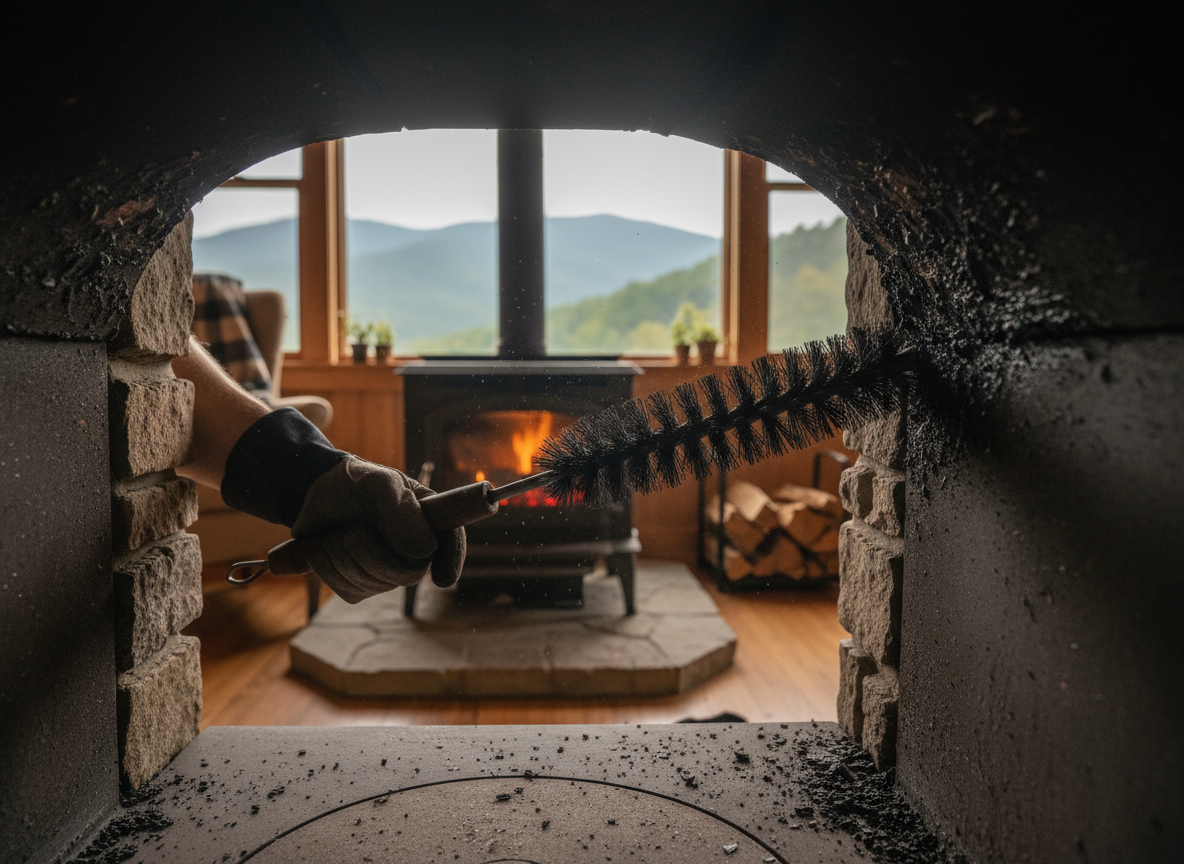
Burning only seasoned hardwood that has dried at least six to twelve months and maintaining flue temperatures above 250 degrees Fahrenheit cuts creosote formation sharply in Asheville homes. Western North Carolina's frequent temperature swings and high humidity make these steps essential because damp wood and cool chimney walls promote rapid condensation of unburned gases.
Local Climate and Housing Effects on Creosote
Asheville sits in the Blue Ridge Mountains where winter lows often drop below freezing while daytime humidity stays high. Older brick homes in the Montford District and similar neighborhoods have tall, exposed chimneys that cool quickly after a fire dies down. Cool flue surfaces cause volatile gases to condense into creosote faster than in flatter, drier parts of the state. Homeowners who burn wood during shoulder seasons when nights turn cold but days stay mild see the heaviest deposits because the chimney never stays hot long enough to burn off the residue.
Terrain also matters. Homes on ridges experience stronger winds that can pull heat up the flue too quickly, lowering internal temperatures. In valleys around 4 Herman Avenue Ext, still air lets smoke linger and cool against the liner. Both situations increase the need for attentive wood selection and draft management rather than simply burning more fuel.
Wood Selection and Burning Practices
Select dense hardwoods such as oak, hickory, or locust that have been split and stacked under cover for at least one full year. Test moisture with a meter; aim for readings below 20 percent. Avoid softwoods and any wood stored outdoors without protection because the extra water content forces the stove to run cooler while releasing more unburned compounds. Build small, hot fires rather than large smoldering ones. Keep the air intake open until a strong bed of coals forms, then reduce it gradually. This routine maintains higher flue temperatures and leaves less creosote on the walls.
Limit the amount of paper and kindling used each time; excessive starter material adds resins that stick early in the burn cycle. Clean ash from the firebox before it builds above two inches because a deep ash bed insulates the fire and drops combustion efficiency.
Inspection and Cleaning Schedule
Schedule a chimney inspection service before the first cold snap each fall and again after the season ends. In the Asheville area, most wood-stove users need a chimney cleaning service after every 1.5 to 2 cords burned or at minimum once per heating season. Creosote that reaches stage two or three requires mechanical removal; chemical treatments alone will not restore safe clearance. Keep a simple log of cords burned and visual checks of the flue door to spot glazing early.
During inspections, technicians also check for hairline cracks in flue tiles that let cold air leak in and accelerate condensation. Addressing these small defects prevents larger creosote problems the following winter.
Connecting Maintenance to Overall Chimney Health
Creosote reduction works best when paired with routine chimney maintenance. A properly fitted chimney cap keeps rain out so liners stay dry and resist rapid cooling. In Western North Carolina's heavy spring and fall rains, water that enters an uncapped flue mixes with creosote acids and speeds deterioration of mortar joints. Homeowners who also read Preparing Chimneys for Wind-Driven Rain on Asheville's Mountain Ridges learn how ridge-top wind patterns interact with the same moisture issues that worsen creosote.