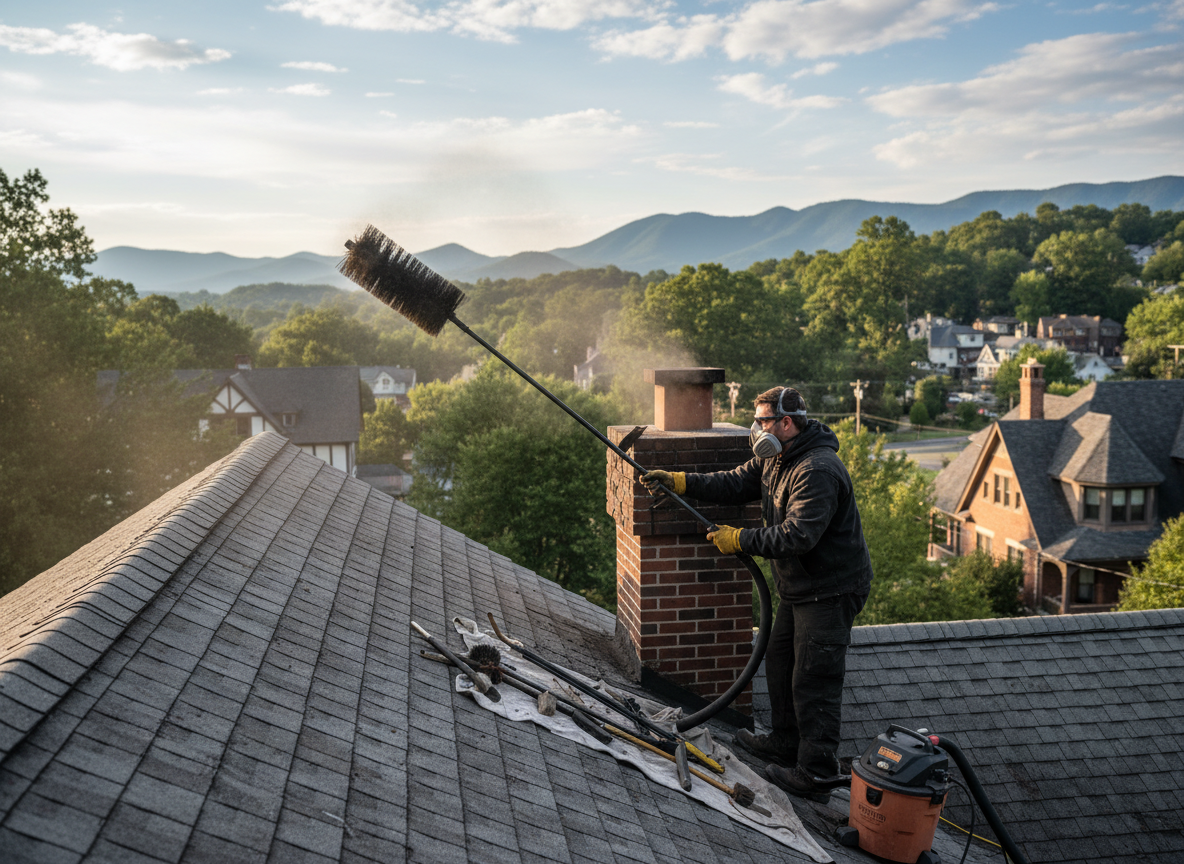
Asheville's older housing stock in neighborhoods like Montford and Biltmore Village often features masonry chimneys built before modern codes, with narrow flues that trap creosote faster when burning seasoned hardwood during cold snaps. Regular cleaning prevents chimney fires that can spread to the roof or attic insulation common in these structures. Technicians use rotary brushes sized for the flue diameter and inspect for cracks that allow water intrusion from the area's frequent mountain rains.
Homes near the French Broad River or on steeper slopes around Asheville experience higher humidity that combines with wood smoke to form sticky deposits requiring more aggressive scraping than drier inland areas. Skipping annual service risks blocked draft that forces smoke back into living spaces, especially in single-story bungalows where the chimney run is shorter. We check the crown and flashing for separation that lets rainwater enter the flue and accelerate deterioration.
In Buncombe County, wood-burning appliances in homes built between 1920 and 1970 frequently lack modern liners, making thorough cleaning essential before each heating season. We remove debris from the smoke chamber and inspect for animal nests that block airflow after summer months. Proper cleaning also reveals spalling bricks or loose mortar that can worsen with freeze-thaw cycles on higher elevations around Asheville.
Technician insight
In Asheville, the thing that catches most people out with chimney cleaning service is how quickly creosote hardens in the damp air around the French Broad River valley, especially in unlined flues of pre-1960 homes in Montford and West Asheville where wood stoves run daily once winter temperatures drop.
Slow Draft in Montford Bungalow
Homeowner reported smoke entering the living room on cold mornings. Inspection showed heavy creosote coating the flue walls from frequent burning. Rotary brushing and vacuuming cleared the buildup while checking for liner gaps. Draft returned to normal and the system passed the post-clean inspection.
How it works
- 1
Initial Assessment
Examine the chimney exterior, flue opening, and damper from the roof and interior to identify access points and safety concerns.
- 2
Protect Work Area
Cover floors, furniture, and registers with drop cloths and tape to contain soot during the cleaning process.
- 3
Mechanical Cleaning
Run rotary brushes and rods through the flue to break up creosote and debris, followed by vacuum extraction.
- 4
Final Inspection
Re-check the flue, smoke chamber, and damper for remaining buildup or damage before removing protective coverings.
Pricing
Upfront quotes based on chimney height, number of flues, and creosote level after inspection.