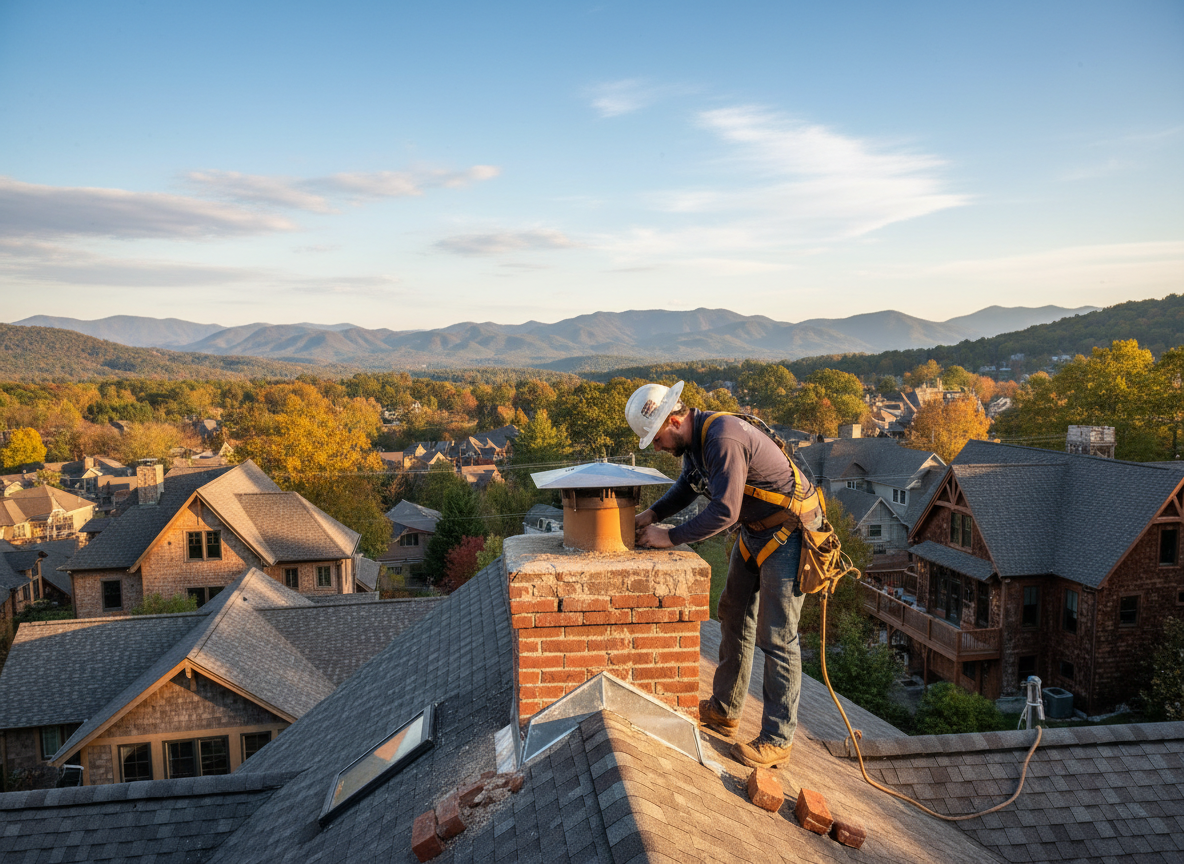
Chimney caps in the Asheville area face constant stress from high winds funneled through mountain gaps and frequent heavy rainfall that accelerates corrosion on metal components. Older brick chimneys common in pre-1960 homes often have original galvanized caps that fail at the seams first, allowing water to enter the flue and damage masonry below. Stainless steel replacements hold up better against the local humidity and acid rain but require precise fitment on irregular flue tiles found in many Asheville structures.
Access challenges arise on steep lots typical along the French Broad River corridor, where scaffolding or roof anchors become necessary to reach caps safely without disturbing surrounding slate or metal roofing. Edge cases include caps deformed by falling branches during winter storms or clogged with pine needles that retain moisture and speed rust. Proper sealing with high-temperature silicone at the base prevents recurrence, though homeowners should avoid DIY mesh additions that can trap creosote and create fire hazards.
Code considerations in Buncombe County emphasize spark arrestors on caps for properties near wooded areas to reduce ember escape during dry spells. We inspect the full flue condition during every cap job because settling foundations in the hilly terrain can shift the chimney enough to misalign a new cap. Replacement timing often aligns with spring inspections after winter freeze-thaw cycles have widened existing cracks.
Technician insight
In Asheville, the thing that catches most people out with chimney cap repair is how the steep terrain channels wind gusts that twist and loosen caps on older chimneys, especially those built before widespread use of stainless steel in the river valley neighborhoods.
Rusted Cap on Hillside Home
Heavy spring rains sent water down a flue in a 1940s Asheville house. Inspection showed the original galvanized cap had corroded through at the seams from constant mountain moisture. We removed the failed unit, installed a fitted stainless replacement, and sealed the base. Subsequent storms produced no further leaks.
How it works
- 1
Site Assessment
Evaluate cap condition, flue alignment, and roof access on the specific Asheville property.
- 2
Material Selection
Match stainless or custom-fabricated cap to existing flue size and local wind exposure.
- 3
Removal and Preparation
Detach old cap, clear debris, and inspect for underlying masonry damage.
- 4
Installation and Sealing
Secure new cap with proper anchors and apply weatherproof sealant at all joints.
- 5
Final Check
Test for water intrusion and confirm spark arrestor function before leaving the site.
Pricing
Upfront quotes reflect access difficulty on sloped Asheville lots and material choice between standard and custom caps.