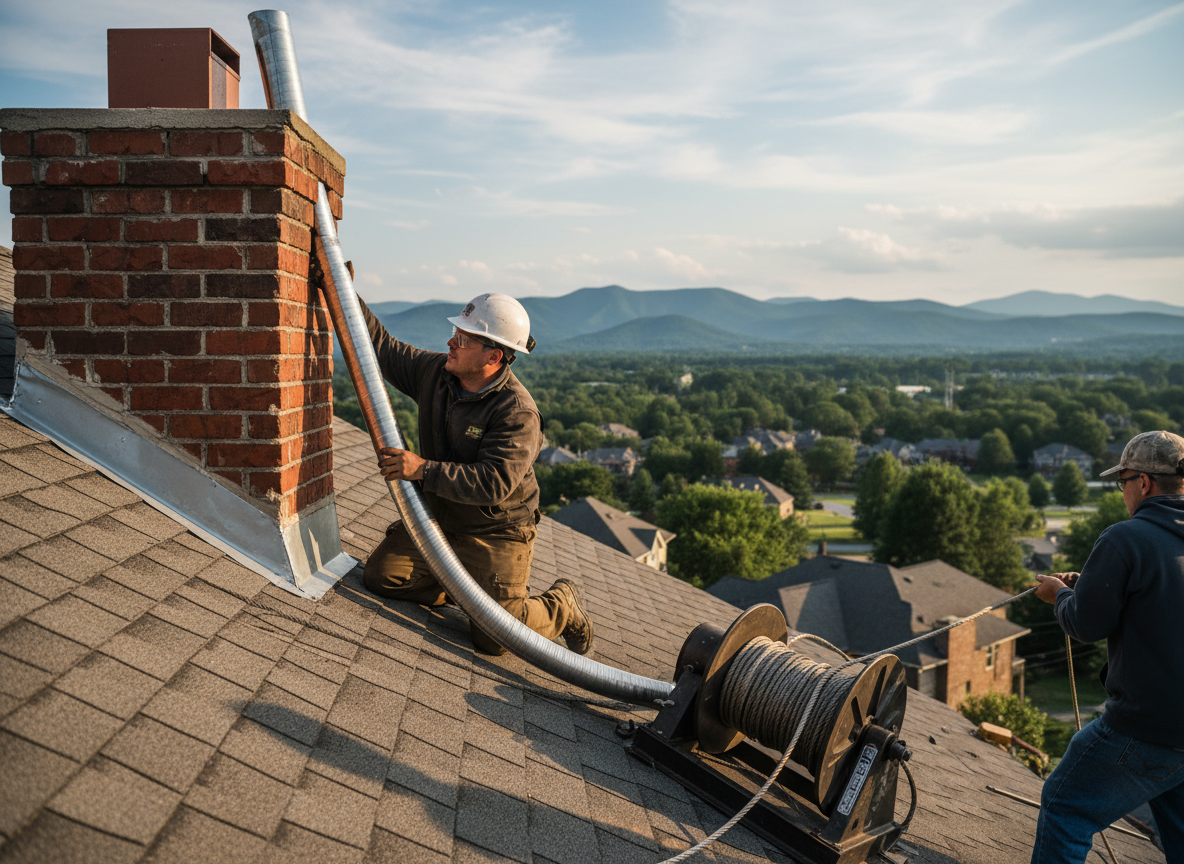
Chimney relining replaces a damaged flue with a new, code-compliant liner that restores safe draft and protects masonry from creosote and moisture. In Asheville homes built before 1950, common in neighborhoods like Biltmore Village and Montford, original clay tiles often crack from repeated freeze-thaw cycles and heavy spring rains. Stainless-steel or cast-in-place liners are selected based on fuel type and chimney height, with careful attention to offsets that appear in many two-story Victorians.
Before installation the chimney must be cleaned and inspected for structural movement caused by settling on the area's clay-heavy soils. A camera survey reveals hidden voids or spalling that could allow water intrusion from the frequent mountain fog and downpours. Proper sizing prevents backdrafting when cold air sinks down the flue during winter nights, a condition homeowners notice when wood smoke lingers inside.
Relining also addresses the transition where the chimney meets the roofline, sealing flashing points that leak during Asheville's intense summer thunderstorms. The work is performed from the top down or bottom up depending on access, always leaving the exterior brick untouched unless a crown repair is required at the same time.
Technician insight
In Asheville the thing that catches most people out with chimney relining is how the steep roof pitches on older homes around the River Arts District force extra time rigging safe access and how the constant moisture from fog and rain accelerates deterioration of any unsealed clay tile.
Relining an Offset Chimney in Montford
The homeowner reported smoke backing into the living room on cold mornings. Camera inspection revealed a cracked clay tile and two tight offsets typical of 1920s construction. We installed a flexible stainless liner sized for the wood stove, sealed the crown, and restored proper draft without disturbing the exterior brick.
How it works
- 1
Initial Camera Inspection
A full-length video scan identifies cracks, offsets, and creosote buildup inside the flue.
- 2
Measurement and Liner Selection
Chimney height, diameter, and fuel type determine whether stainless steel or cast-in-place material is used.
- 3
Flue Preparation
Loose debris is removed and any minor masonry repairs are completed before liner insertion.
- 4
Liner Installation and Testing
The new liner is placed, sealed at joints, and the system is smoke-tested for proper draft.
Pricing
Cost depends on chimney height, number of offsets, and liner material; an on-site inspection provides the exact scope.