2026-10-23 ·
How to Spot Chimney Damage After Asheville's Freeze-Thaw Winters
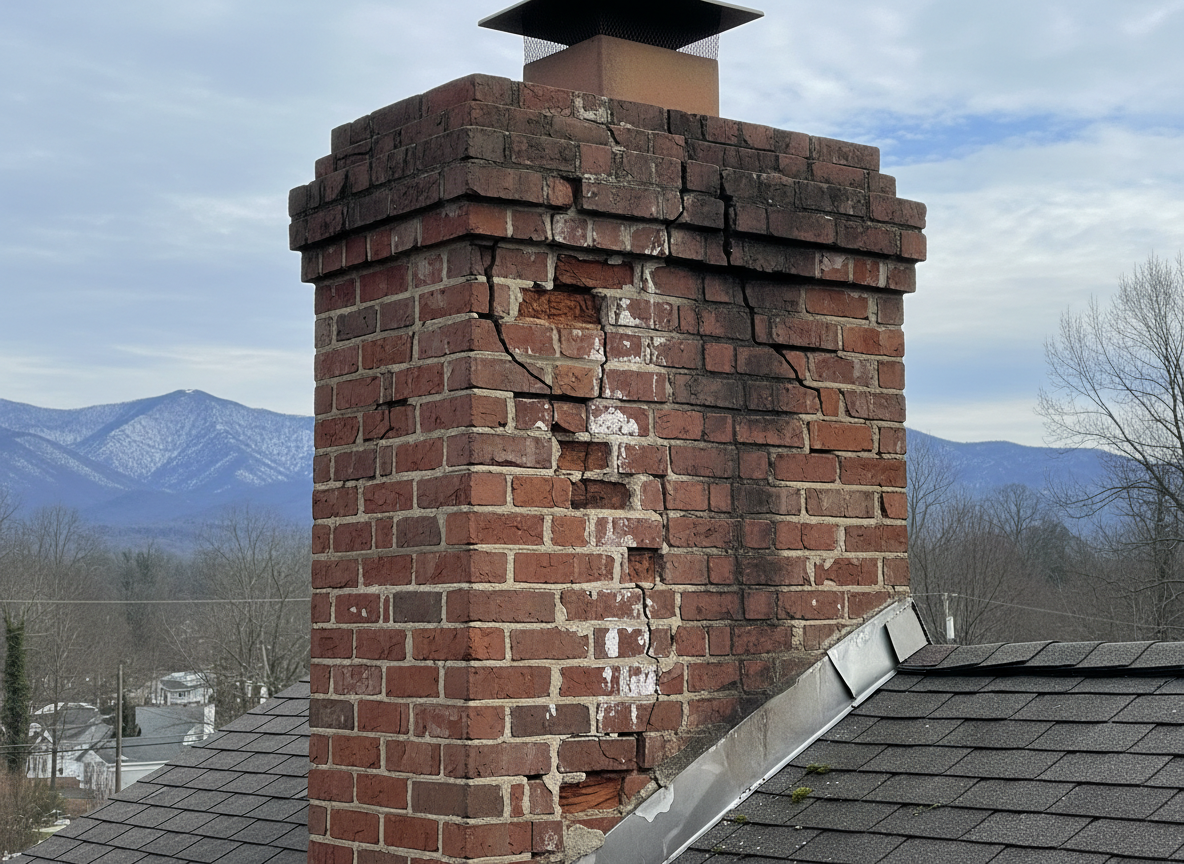
Asheville winters cycle between freezing nights and daytime thaws that force water deeper into masonry joints, widening cracks and loosening bricks on chimneys built before 1970. Homeowners notice spalling faces, white efflorescence streaks, and gaps around flashing first, especially on south-facing stacks exposed to the most temperature swings in Buncombe County.
Inspecting Masonry for Spalling and Cracks
Walk the roofline twice each spring and look for bricks with flaked or powdery surfaces where moisture froze inside the pores. In older Montford District houses the original soft brick often shows hairline cracks running vertically along the corners after three or four hard freeze-thaw seasons. Measure any opening wider than 1/8 inch; those gaps let additional water reach the flue and accelerate deterioration. Check the same areas after heavy March rains because water that entered during a January freeze now pushes material outward. Document the locations with photos so you can track whether the damage spreads by the next inspection.
Checking Mortar Joints and Tuckpointing Needs
Run a flat screwdriver along every mortar joint you can reach from the roof; sound mortar resists the blade while deteriorated joints crumble or leave a 1/4-inch recess. Freeze-thaw action in the Asheville area repeatedly expands ice in these narrow spaces, pushing bricks out of alignment by as much as 1/2 inch over a decade. Look for missing mortar pieces on the ground below the chimney after winter storms. Homes near the French Broad River often show faster joint failure because higher humidity keeps the masonry damp longer between freezes. Chimney tuckpointing restores the original profile and stops water entry before the next cold season.
Evaluating Flashing and Crown Integrity
Lift the edge of step flashing where it meets the roof shingles and check for rust holes or pulled nails that allow meltwater to run behind the masonry. Asheville's mountain ridges create wind-driven rain that forces water under poorly seated flashing during late-winter thaws. The concrete crown on top should slope outward with no cracks wider than 1/16 inch; standing water in those cracks freezes and breaks the crown apart within two seasons. If you see dark water stains on the attic ceiling directly below the chimney, the crown or flashing has already failed. What Causes Chimney Leaks During Heavy Spring Rains in Asheville explains how the same entry points worsen once spring storms arrive.
Looking Inside the Flue and Firebox
Shine a bright flashlight up the flue from the firebox and watch for white mineral deposits or missing flue tiles that indicate water has penetrated the liner. Freeze-thaw damage often starts at the top and works downward, so the upper third of the flue shows the earliest tile cracks. In the firebox itself, check for damp soot that smells musty; this signals water entering from above and mixing with creosote. Brick or stone chimneys in South Asheville neighborhoods built on steeper slopes tend to lean slightly after years of uneven settling combined with winter moisture cycles, making interior inspection even more important.
When to Schedule Professional Follow-Up
If any single defect spans more than two courses of brick or water stains appear inside the home, contact a technician who can perform a full chimney inspection service. PrimeBastion operates 24/7 from 4 Herman Avenue Ext, Asheville, NC 28803 and can assess the stack before the next freeze cycle begins. Early repair of small mortar losses or crown cracks prevents the need for full chimney masonry repair later. Keep a simple annual log of photos and dates so changes become obvious before they turn into leaks or draft problems.