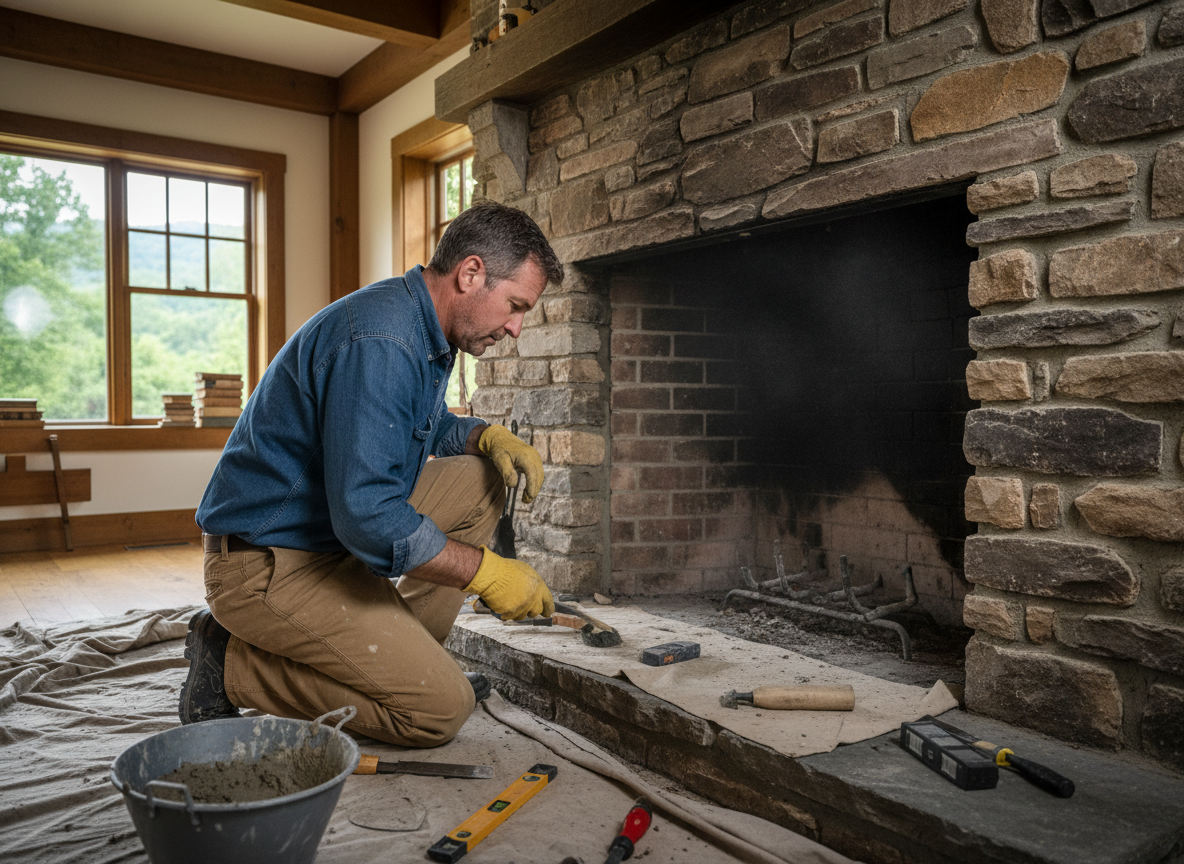
Asheville's older housing stock, especially pre-1950 brick homes in Montford and the historic districts, often features fireplaces built with local river stone or soft brick that absorbs water during the region's frequent heavy rains. Restoration begins with a full inspection of the firebox, damper, and hearth for spalling or loose mortar caused by freeze-thaw cycles in winter. We repoint with lime-based mortar matched to the original mix rather than modern Portland cement, which traps moisture and accelerates cracking in these older structures.
High humidity and driving rain off the Blue Ridge can push water through chimney crowns and flashing, leading to hidden damage behind the facing. In restoration we remove failed plaster or tile, clean the substrate, and rebuild the firebox lining with refractory materials rated for the temperature swings common here. Edge cases include homes where the fireplace shares a wall with an addition, requiring careful flashing integration to prevent leaks into living spaces.
Code considerations in Buncombe County require proper clearances and non-combustible hearths when rebuilding; we always verify these before closing up the work. Homeowners sometimes attempt DIY tuck-pointing with the wrong mortar, which fails within two seasons and forces a more extensive rebuild later. We document every step with photos so clients can see exactly what was repaired.
Seasonal Considerations
Spring rains often reveal winter damage first, while fall is the best window for exterior work before temperatures drop. We schedule around the wettest periods to ensure mortar cures properly in Asheville's variable mountain climate.
Technician insight
In Asheville, the thing that catches most people out with fireplace restoration is how quickly the heavy mountain rainfall and high humidity push water through soft historic brick in Montford homes; homeowners often miss the damage until the firebox starts spalling from the inside.
Montford Fireplace Rebuild
Water had saturated the firebox of a 1920s brick home after repeated winter storms. We found deteriorated mortar and loose river stone behind the facing. We removed the damaged sections, repointed with lime mortar, and rebuilt the hearth with proper slope. The fireplace now drafts correctly and shows no further moisture issues.
How it works
- 1
Initial Assessment
We examine the firebox, hearth, damper, and exterior chimney for water intrusion and structural issues common in Asheville homes.
- 2
Material Matching
We select mortar, brick, or stone that matches the original construction found in Montford and Biltmore Village properties.
- 3
Repair Execution
Damaged sections are removed, substrates cleaned, and new work installed with proper curing time to handle local humidity.
- 4
Final Inspection
We verify clearances, test draft, and confirm the fireplace meets safety standards before returning the space to use.
Pricing
Pricing depends on the extent of brick or stone damage, access in older homes, and whether interior or exterior work is required.