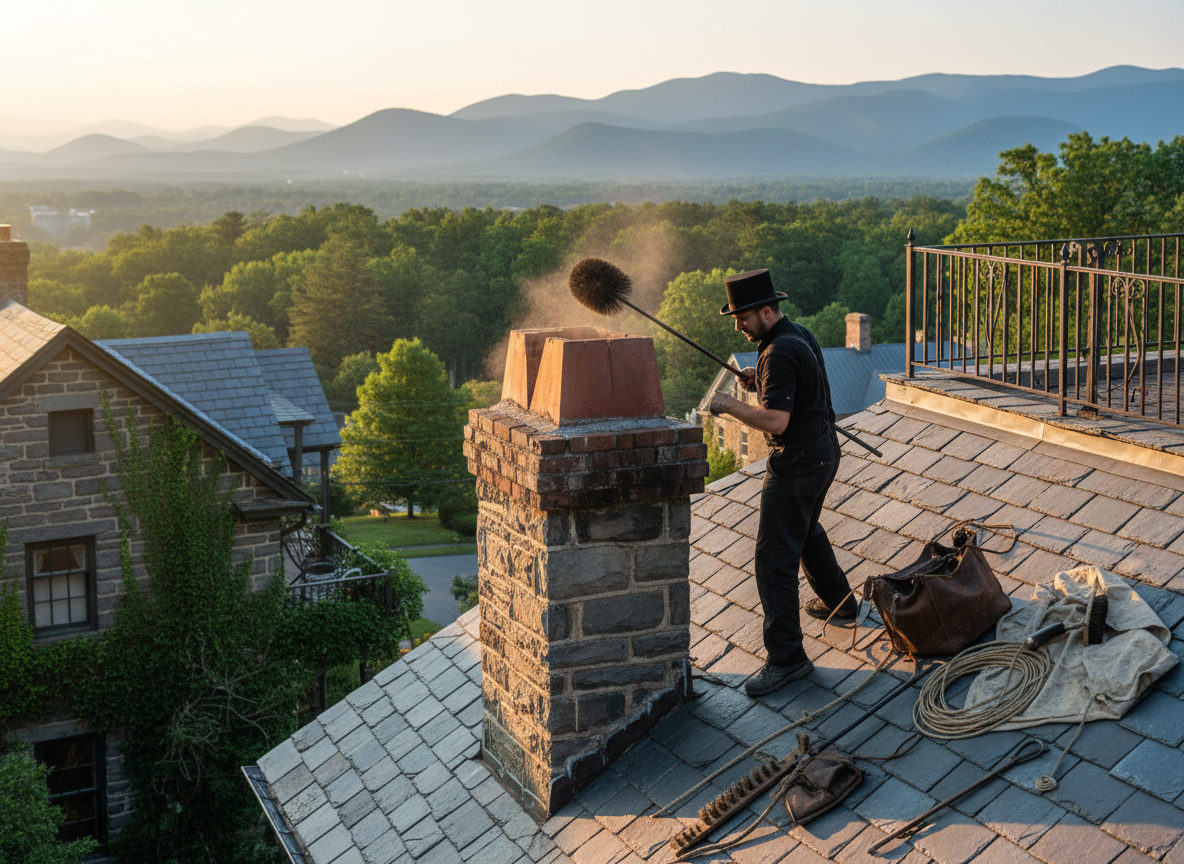
Asheville's housing stock includes many pre-war brick chimneys in neighborhoods like Montford and Biltmore Village that accumulate dense creosote layers from frequent wood burning during cold mountain winters. Moisture from the area's high rainfall and fog can soften that buildup and make it harder to remove without damaging flue tiles. A thorough sweep must account for these conditions to restore proper draft and reduce carbon monoxide risk in homes where fireplaces see heavy seasonal use.
Mountain terrain around Asheville often means steep driveways and limited access points that affect how equipment is positioned during a sweep. In older homes the mortar joints may be fragile after decades of exposure, so technicians work carefully to avoid dislodging debris into living spaces. Routine sweeping also reveals issues like blocked caps from pine needles common in the surrounding forests before they lead to water intrusion or draft problems.
Homeowners in the Asheville area frequently overlook the need for annual sweeps after mild winters when fireplaces still see use on damp evenings. Skipping this step allows Stage 3 creosote to form, which is far more flammable and requires specialized tools beyond basic brushes. Proper cleaning restores safe operation without unnecessary repairs to the chimney structure itself.
Seasonal Guidance
Winter storms in Buncombe County increase chimney use while spring rains highlight any remaining moisture issues. Scheduling a sweep before peak cold months prevents most draft complaints reported by local residents.
Technician insight
In Asheville, the thing that catches most people out with chimney sweep near me is how quickly creosote hardens in the damp mountain air when homeowners burn unseasoned wood from local lots, especially in Montford homes where narrow flues and steep roof pitches slow the job and increase the chance of incomplete removal if rushed.
Montford Chimney Draft Issue
A homeowner noticed smoke backing into the living room after several rainy weeks. Inspection revealed compacted creosote near the flue bend caused by frequent burning in the damp climate. We performed a full mechanical sweep and cleared the obstruction. Draft returned to normal with no further smoke issues.
How it works
- 1
Initial Assessment
Evaluate chimney condition from the roof and interior to identify creosote levels and any access constraints typical of Asheville terrain.
- 2
Protective Setup
Cover surrounding surfaces and verify ventilation paths to contain soot during cleaning in older homes.
- 3
Mechanical Sweeping
Use appropriate brushes and rods sized for the flue to remove buildup without damaging tiles common in pre-1950 Asheville construction.
- 4
Final Inspection
Confirm clear draft and document findings before restoring the fireplace for safe use.
Pricing
Upfront quotes based on chimney height, access difficulty, and creosote stage; no hidden fees.