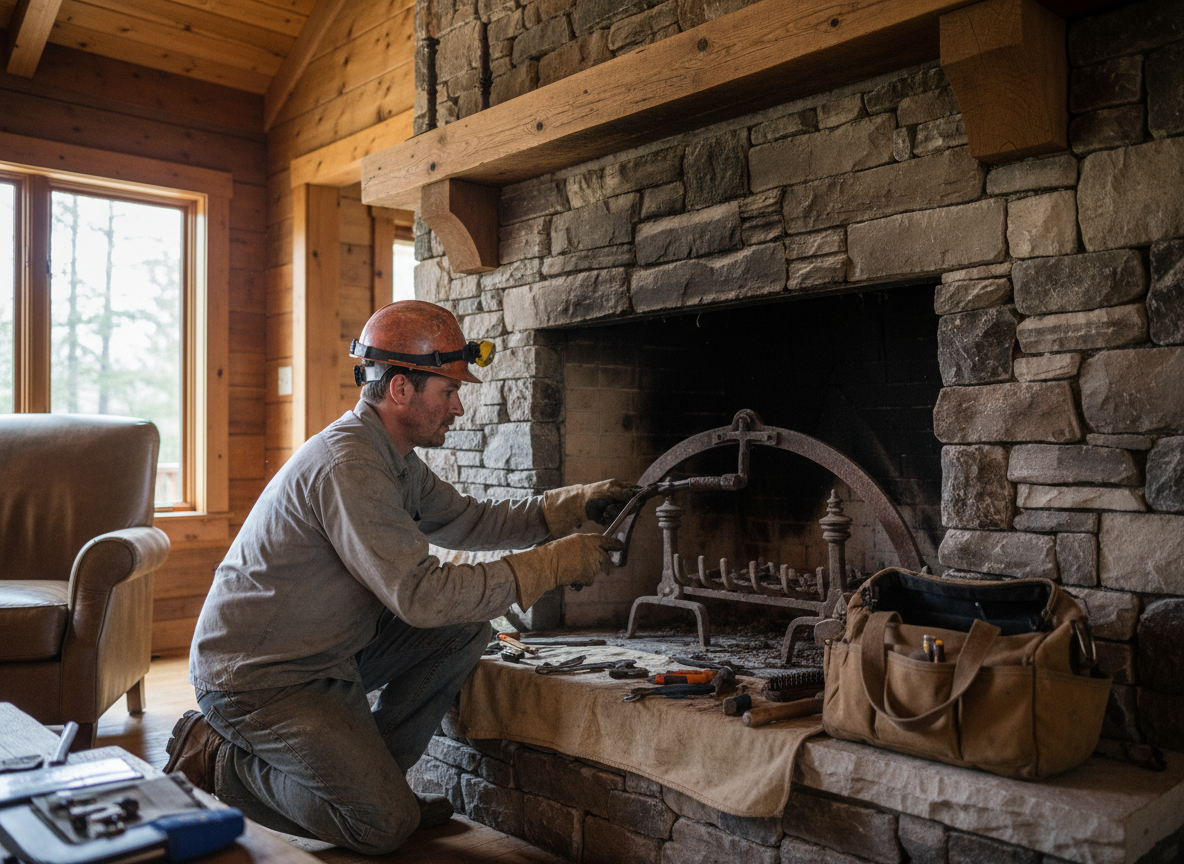
Chimney dampers in Asheville homes often fail because of the region's freeze-thaw cycles and steady rainfall that rusts metal components and warps frames. Many houses in areas like Montford and West Asheville still have original cast-iron or steel dampers installed decades ago that no longer close tightly, allowing cold air infiltration and moisture that damages flue liners. A proper repair starts with checking whether the damper plate, pivot bar, or cable assembly is the actual point of failure rather than assuming a full replacement is needed.
Access is frequently complicated by tight attic spaces and steep roof pitches common on Asheville's hillsides. Technicians must verify that the damper seals against the smoke chamber without restricting draft when open, especially on wood-burning fireplaces that see heavy winter use. Edge cases include dampers installed behind glass doors or in chimneys serving multiple flues, where misalignment can create backdrafting risks that require careful measurement before any adjustment.
Repairs focus on replacing seized pivot pins, straightening bent plates, or installing stainless-steel retrofit dampers that resist the local humidity better than original mild-steel parts. Homeowners should never force a stuck damper, as this can crack flue tiles or dislodge creosote buildup that then falls into the firebox. Work is performed with the understanding that Asheville's older masonry chimneys often lack modern cleanout access, making thorough inspection of the damper area essential before any parts are ordered.
Technician insight
In Asheville, the thing that catches most people out with chimney damper repair is how the frequent rain and cold snaps in the mountains seize the pivot bars on 1920s–1940s homes in neighborhoods like Grove Park before homeowners notice the draft coming down the flue.
Rusted Damper in 1930s Montford Chimney
Homeowner reported cold air and smoke smell when the fireplace was not in use. Inspection found the original cast-iron damper plate rusted to its frame and no longer seating. We freed the mechanism, replaced the pivot bar and plate with stainless components, and confirmed a tight seal. The fireplace now drafts correctly and holds heat when closed.
How it works
- 1
Initial Inspection
Examine the damper from both the firebox and roof side to identify binding, rust, or cable failure while noting chimney height and roof access conditions.
- 2
Diagnosis and Access Planning
Determine whether repair, retrofit, or replacement is required and plan the safest entry point given the home's roof pitch and attic configuration.
- 3
Component Repair or Replacement
Clean or replace pivot hardware, straighten or swap the plate, and install stainless components rated for repeated thermal cycling.
- 4
Function Test and Sealing Check
Operate the damper through full range, verify airtight closure when closed, and confirm proper draft when open before leaving the site.
Pricing
Upfront quotes provided after inspection; cost driven by damper type, access difficulty, and whether stainless retrofit parts are required.