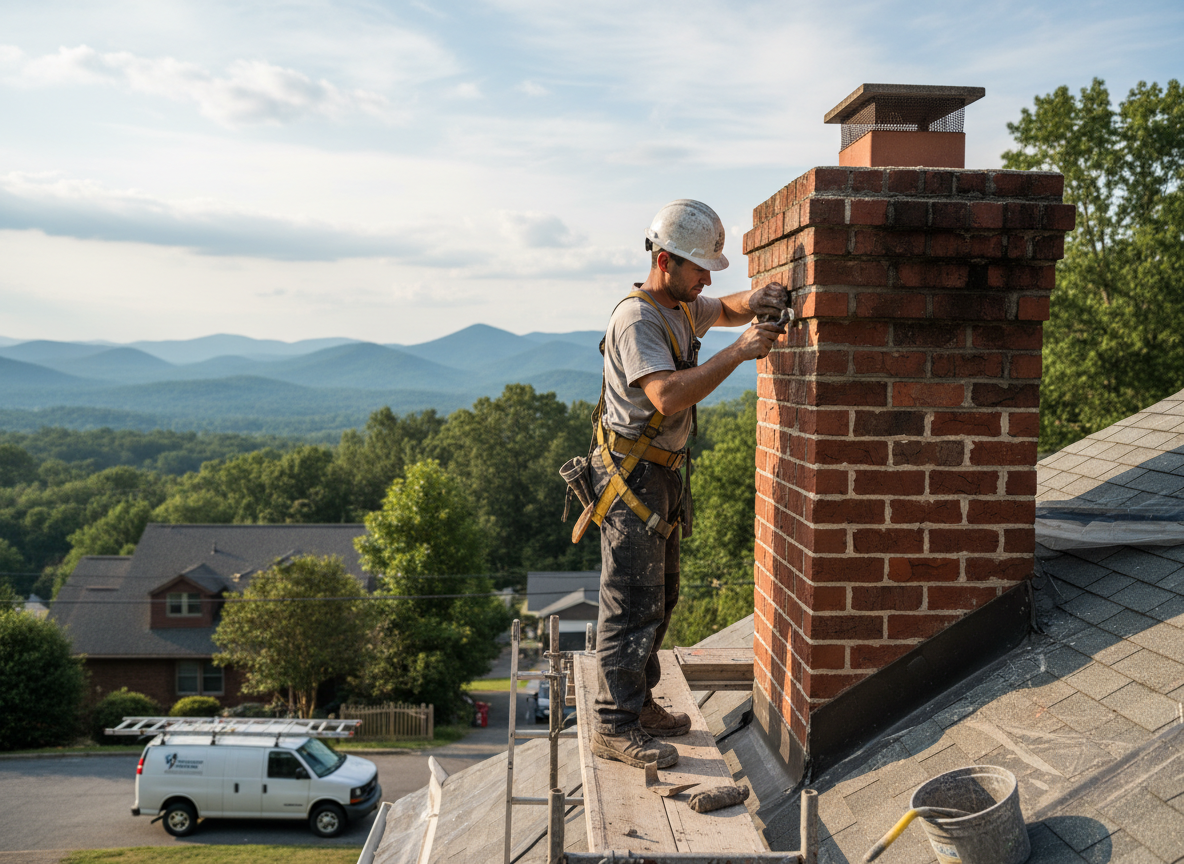
Chimney repair in Asheville often starts with the effects of repeated freeze-thaw cycles on brick and mortar in homes built before 1970. Water enters hairline cracks during heavy spring rains, then expands when temperatures drop below freezing in the higher elevations of Buncombe County, widening gaps around the flue liner and crown. Technicians check for spalling brick and loose flashing where the chimney meets the roof, especially on steep pitches common in the area.
Affordable repairs focus on targeted tuckpointing and crown rebuilding rather than full rebuilds when the flue remains sound. Crews use high-temperature refractory mortar that holds up to the rapid temperature swings between day and night in the Asheville valley. They also verify proper slope on the crown so water sheds away instead of pooling, a frequent failure point on older stacks that have settled unevenly on the hilly terrain.
Edge cases include chimneys serving wood stoves added after the original construction, where the smaller flue creates negative pressure and pulls moisture down the unused portions. In these situations, a stainless steel liner insert is often the most cost-effective long-term fix. Every job ends with a visual check of the smoke chamber and damper to confirm draft is restored without creating new leak paths at the roofline.
Technician insight
In Asheville, the thing that catches most people out with affordable chimney repair is how the constant damp from mountain fog and runoff on sloped lots keeps mortar joints wet for weeks, so a small crack that looks cosmetic in summer turns into a full flue separation by January.
Water Intrusion on West Asheville Chimney
Homeowner reported damp smells near the fireplace after several days of rain. Inspection showed settled crown and failed step flashing on a 1960s brick stack. Crew rebuilt the crown with correct slope and replaced the flashing, restoring a watertight seal before the next cold front arrived.
How it works
- 1
Site Assessment
Technician inspects the chimney exterior, crown, flashing, and interior flue from the cleanout to the top while noting any nearby trees or roof valleys that direct water toward the stack.
- 2
Diagnosis and Quote
Findings are explained on site with photos, followed by a written quote that lists materials and labor separately so homeowners can see exactly what moves the price.
- 3
Repair Execution
Work proceeds with mortar removal, new tuckpointing, crown reconstruction, or flashing replacement using materials matched to the existing masonry color and texture.
- 4
Final Check
After cleanup, a second visual inspection confirms water sheds correctly and the flue is clear before the crew leaves the property.
Pricing
Upfront written quotes after inspection, priced by scope rather than flat rates.